Taking bioMerieux's Annual Sales Meeting Hybrid (Part 1)
How a global annual sales meeting moved from fully in-person to hybrid, and the planning decisions that made both audiences work.
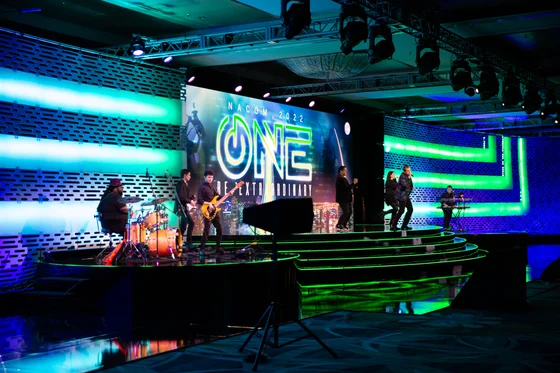
When bioMerieux needed to take its annual sales meeting hybrid, the challenge was not simply adding a stream to an in-person event. It was rethinking a meeting built for a room so that it worked equally well for colleagues joining from around the world. This is the first of a two-part look at how that came together, focused on the planning decisions that shaped the event.
Why did bioMerieux move its annual sales meeting to a hybrid format?
The annual sales meeting is a cornerstone event: it aligns a global sales organization, shares strategy, and builds the relationships that carry through the year. When bringing everyone into one room was no longer practical, the goal was to preserve what made the meeting valuable while opening it to attendees who could not travel. Hybrid was the way to keep the in-person energy for those who could attend while giving remote colleagues a real seat, not a watered-down one.
What was the biggest planning challenge in going hybrid?
Designing for two audiences at once. An in-person sales meeting relies on room energy, side conversations, and the momentum of being together. A remote audience has none of that by default and disengages quickly if the event is just a camera pointed at the stage.
The planning had to treat the remote audience as a first-class group with its own needs: tighter pacing, direct address from the stage, interaction designed for them, and a broadcast quality that made watching worth their time. Every agenda decision was evaluated against both audiences rather than the room alone.
How do you keep a global remote audience engaged across time zones?
Time zones shaped the schedule as much as the content. A meeting comfortable for the in-person group could fall at difficult hours for colleagues in other regions. The plan accounted for this by tightening the agenda, building in the right breaks, and making sure the most important content landed at times that worked for the broadest global audience.
Interaction was built in deliberately rather than left to chance. Polls, direct questions to the remote audience, and moments designed to include those watching from a distance kept remote attendees participating instead of passively watching.
What made the production side work for both audiences?
A single production approach covering both the in-person and broadcast sides kept everything aligned: shared content, consistent branding, and one team responsible for how the event looked and felt in the room and on screen. Dedicated bandwidth, professional switching, and multiple camera angles gave the remote audience a broadcast worth their attention rather than a static feed.
Part 2 looks at how the event executed live and what the results showed about the hybrid format’s value going forward.