How to Nail the Opening Experience at Your Corporate Event
The opening experience sets the tone for your whole event. How to design the first moments to create focus, energy, and alignment.
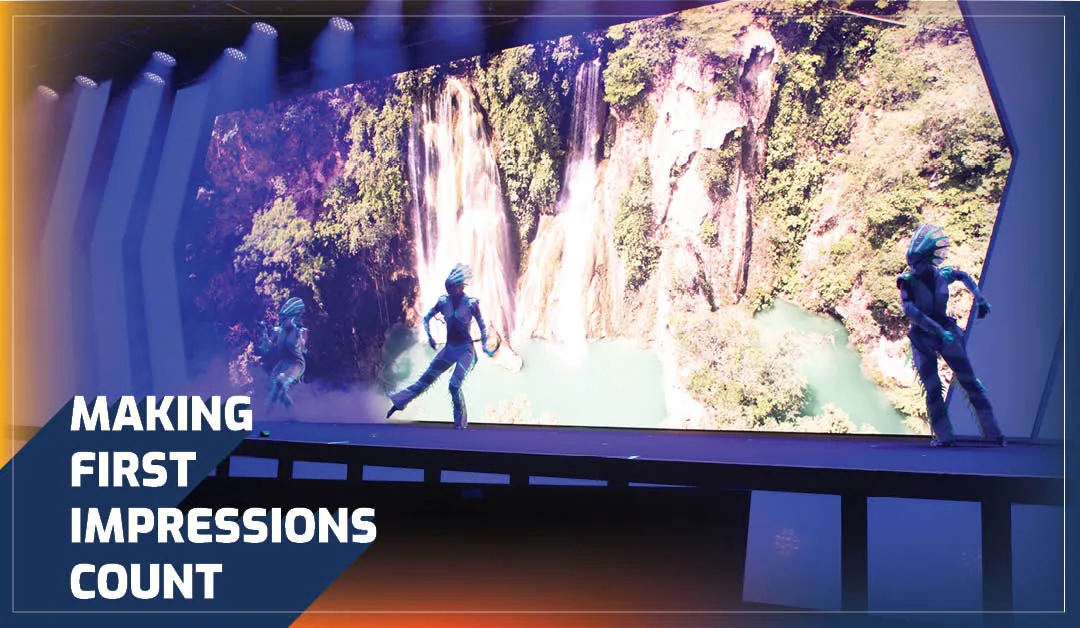
The opening experience of a corporate event determines whether the audience arrives mentally or just physically. Everything attendees encounter from the moment they walk in, the environment, the energy, the first video or live moment, creates an expectation for what the next few days will be. Get it right and the audience is primed. Miss it and you spend the rest of the event trying to recover their attention.
“How you open the event is so important for the audience,” says Allison Vecchione, account executive at Stagedge. “You are sharing all the things your company is excited about with them, because they matter.”
What elements make up the opening experience at a corporate event?
The opening experience includes everything from pre-show atmosphere, like lighting, music, and environmental design, through the first official moment on stage. That might be a video, a live performance, an executive welcome, or an interactive content piece. The physical arrival experience, registration flow, and pre-function space are also part of it. By the time the first presenter takes the stage, the opening experience is already in progress.
How do you define the right tone for your event opening?
Start with the event’s primary message. Is it a year of growth and momentum? A reset after a difficult period? A product launch that needs excitement? The opening should embody that message rather than introduce it. Attendees should feel the theme before anyone names it.
“The most successful openings are ones where the event’s themes and goals have been established in advance,” says Vecchione. “That way, you will know exactly the message you are trying to convey.”
Define the single emotional outcome you want the audience to carry into the first session, whether that is confident, energized, aligned, or inspired, and design backward from there.
What production elements have the most impact on an opening experience?
Music and lighting. The pre-show environment is set by what people hear and see when they walk in. A house track that builds energy over the pre-show period, combined with lighting that shifts during the countdown, creates anticipation without a single spoken word.
Video content. An opening video that runs 90 seconds to three minutes, tight, well-produced, with a clear narrative arc, is one of the most effective tools for establishing tone and building momentum before the first speaker walks out.
The first live moment. The transition from video or pre-show to the first live presence on stage is a high-stakes production moment. The timing, the music cue, the lighting change, and the speaker’s entrance all happen at once. Rehearsing this sequence is as important as rehearsing the presentation itself.
How much lead time does an effective opening experience require?
Significantly more than most event planners plan for. An opening video requires a creative brief, script development, production, and revisions, which is a six-to-eight week minimum for anything beyond a simple cut. Custom scenic and environmental design has similar lead times for fabrication and installation.
The opening experience should be the first design decision made, not the last. It sets the creative direction that every other element of the event should support.
What mistakes do corporate events most often make with their opening experience?
Starting late without accounting for it. If doors open and the pre-show runs past the announced start time, the opening moment loses its energy. Build buffer into the run of show and treat the scheduled start time as real.
Underinvesting in the pre-show environment. The minutes before the opening are when attendees are forming their first impressions. An empty stage with house lights up communicates nothing. Even modest environmental design, like lighting, music, and a countdown clock, signals that the production team is in control.
Skipping the rehearsal. The opening sequence is the most technically complex moment of many events. Running it once in full, with all cues, before the event day is not optional.