A Hybrid Event Needs More Than a Livestream
A strong hybrid event needs more than a camera feed. Discover why expert livestreaming, broadcast production, and remote audience engagement matter for success.
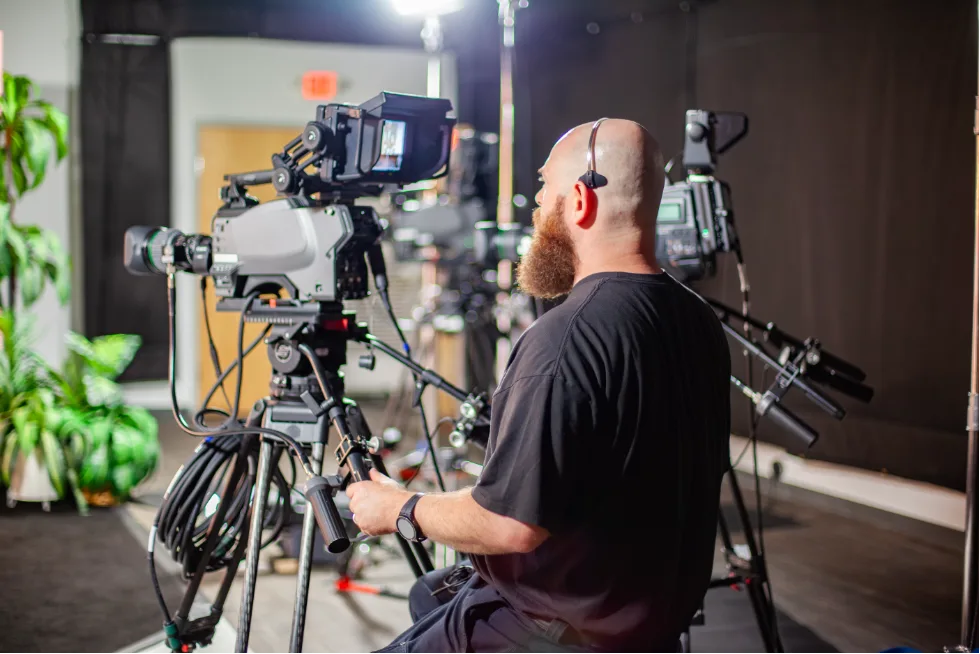
Hybrid events can create a strange illusion. From the room, everything can look perfect. The stage is lit. The microphones sound good. The speakers are comfortable. The audience is engaged. The show is moving exactly the way it should.
Meanwhile, hundreds or thousands of people watching online may be having a completely different experience.
They may be hearing inconsistent audio. They may be watching one static camera angle for an hour. Slides might be difficult to read. Questions from the virtual audience may have nowhere to go. A platform issue may be affecting part of the audience without anyone in the ballroom even knowing it.
That is why I do not think livestreaming should be treated as an add-on to a live event. Once an event has a meaningful remote audience, you are producing two experiences at the same time.
And the second one needs a team that is actually responsible for it.
The Stream Is Its Own Show
A good hybrid event is not simply the in-room program pointed at the internet. The remote audience experiences the event through a completely different set of inputs. Their room is the camera frame. Their sound system is the broadcast mix. Their view of the slides is whatever the stream delivers. Their connection to the speakers, moderators, and other attendees is controlled by the platform.
That means the people producing the livestream need to think like a broadcast team, not just an AV team.
They need to understand camera coverage, switching, graphics, playback, audio routing, encoding, bandwidth, platform configuration, redundancy, remote presenters, recording, and distribution. Just as importantly, they need to understand how those technical decisions affect the person watching from a laptop at home or from an office halfway around the world.
Current industry research reflects that shift. Cvent reports that 68% of event professionals now include hybrid and virtual meetings in their event programs, while 28% of planners say the continued frequency of hybrid and virtual meetings will affect their programs in 2026. Hybrid may no longer dominate every conversation the way it did a few years ago, but it has clearly become a permanent part of the event mix.
The standard has also changed. Recent 2026 hybrid production guidance increasingly describes the stream as its own show, with multi-camera coverage, professional graphics, platform planning, remote moderation, and deliberate engagement for the online audience rather than a single camera feed from the back of the room.
A Dedicated Streaming Team Protects the Remote Audience
The easiest mistake to make in a hybrid event is assuming that because the in-room show is working, the online show must be working too.
It is not always true.
The room may have excellent audio while the webcast feed is distorted. The screens may look great in person while the slide feed is unreadable online. A video may play perfectly in the room but never reach the broadcast output. The speaker may be energized by the audience in front of them while completely forgetting that another audience exists on the other side of the camera.
A dedicated streaming team is watching for those things.
They are monitoring what the remote attendee is actually seeing and hearing. They are checking the stream health, platform behavior, latency, audio, graphics, slides, and camera composition. They are communicating with the show caller and production team when something in the room needs to change for the broadcast. They are thinking about the people who cannot raise their hand and tell somebody at front of house that the experience is not working.
That distinction matters because the remote audience is often the least visible audience onsite. If nobody owns their experience, their problems can become invisible too.
Capture, Broadcast, and Platform Are Different Jobs
Livestreaming also becomes much easier to underestimate because people tend to talk about it as one thing. In reality, a successful webcast sits at the intersection of several different disciplines.
First, there is capture. Cameras need to be positioned for the broadcast, not just for image magnification in the room. The team needs the right shots of presenters, panels, audience interaction, demonstrations, and anything else that helps the remote viewer understand what is happening.
Then there is the broadcast itself. Someone needs to switch those cameras, integrate presentation content, manage graphics, route audio, roll videos, handle remote speakers, and create a program feed that feels intentional. That is a different skill from simply making the room look and sound good.
Then there is the streaming infrastructure. Encoders, networks, content delivery, authentication, backup connections, recording, and platform configuration all have to work together. If the event uses a dedicated virtual event platform, somebody also needs to understand how attendees enter, interact, ask questions, access sessions, and get help.
Those responsibilities overlap, but they are not interchangeable.
A great lighting director is not automatically a broadcast engineer. A great camera operator is not automatically a platform producer. An event technician who knows the room does not automatically know what is happening between the encoder and the viewer.
That is why the streaming portion of a hybrid event should be staffed intentionally. The remote audience deserves specialists in the same way the in-room audience does.
The Platform Is Part of the Experience
One of the most important decisions in hybrid production often happens before the first camera is even specified: where is the audience actually going to watch?
A public stream, a private webcast, a registration platform, a corporate meeting platform, and a full virtual event environment are very different experiences. The right choice depends on the audience, security requirements, participation goals, content structure, analytics, and how much interaction the event actually needs.
A dedicated streaming partner should be able to help make that decision rather than simply accept whatever platform name appears in the brief.
Some events need a highly controlled broadcast with thousands of viewers and minimal interaction. Others need breakout sessions, moderated Q&A, polling, networking, captioning, multilingual support, or remote presenters. Some organizations need single sign-on or strict access control. Others care most about making the content easy to watch later.
The technology should follow the purpose.
That idea is consistent with a broader event-industry trend toward more intentional production. The strongest hybrid programs in 2026 are being described as two connected experiences rather than a physical event with a livestream bolted onto it. That requires the creative, AV, content, and event technology teams to be aligned from the beginning.
Remote Engagement Has to Be Produced Too
Engagement is another place where hybrid events can go wrong quickly.
The people in the room have energy around them. They can talk to the person next to them, see the stage with their own eyes, feel the music, and react with the rest of the audience. A remote attendee has a screen and whatever experience the production team chooses to put inside it.
That does not mean every online event needs games, constant polling, or a chat window exploding with activity. It does mean the virtual audience needs to be acknowledged.
If there is Q&A, can their questions reach the stage? If a speaker addresses the audience, are they also speaking to the camera? Are there breaks or transitions that make sense online, or does the stream simply show an empty stage while the ballroom resets? Is there a host or moderator who can speak directly to remote participants when needed?
Those are production decisions, not just platform features.
Several 2026 hybrid production sources make the same point: the remote audience should be treated as a first-class audience rather than a passive camera feed. The most successful programs are being designed around distinct remote viewing behavior, shorter attention windows, and intentional virtual participation.
Redundancy Matters More When the Audience Cannot See the Fix
Live events always require contingency planning, but streaming introduces a different kind of risk. When something goes wrong in the room, the production team can often see it immediately and communicate directly with the client. When something goes wrong online, the audience may simply disappear.
That makes redundancy especially important.
What happens if the primary internet connection fails? Is there a backup encoder? Is the program being recorded locally even if the stream drops? What happens if the platform has an issue? Who is monitoring the viewer experience? Who is communicating with remote attendees if something changes?
These are not questions to answer five minutes before doors.
A strong streaming partner builds those answers into the plan. They test the network. They rehearse the signal path. They verify platform permissions and presenter access. They establish backup paths where the event warrants them. They know what can fail, what the audience will experience if it does, and what the team will do next.
That does not guarantee that technology will never misbehave. It means the event is prepared when it does.
Hybrid Production Should Start in Pre-Production
The biggest advantage of bringing a streaming team in early is that they can influence decisions while those decisions are still easy to change.
Camera positions affect room layout. Presentation design affects readability online. Lighting choices affect how speakers look on camera. Session timing affects virtual attention. Speaker preparation affects whether presenters acknowledge both audiences. Platform choice affects registration, engagement, analytics, and support. Network requirements can affect venue conversations and cost.
If the streaming conversation begins after the event has already been designed, the team is usually trying to fit a broadcast into decisions that were made for the room.
Sometimes that works. Sometimes it creates compromises that could have been avoided.
Hybrid should be part of the production conversation from the beginning, even if the virtual component is relatively simple. The streaming team does not need to take over the event. They need a seat at the table early enough to protect the experience they are responsible for.
Your Remote Audience Is Still Your Audience
I think this is the part that matters most.
The people watching from home are not secondary attendees. They registered for the event. They gave you their time. They may be employees, customers, partners, investors, prospects, or stakeholders who simply could not be in the room.
They should not receive the leftover version of the experience.
If an organization is going to invite a virtual audience, it should make a deliberate decision about what that audience is going to receive and who is responsible for delivering it.
That is the role of a dedicated streaming partner.
They know the cameras. They know the broadcast. They know the platforms. They know the signal path. And, most importantly, they are thinking about the audience that the rest of the room cannot see.
Because a hybrid event is not successful when the livestream technically stays online.
It is successful when the people watching online feel like the event was produced for them too.
Frequently Asked Questions
Why does a hybrid event need a dedicated livestreaming partner?
A dedicated livestreaming partner owns the remote audience experience. That includes camera capture, broadcast switching, audio, graphics, encoding, platform configuration, stream monitoring, recording, redundancy, and the way remote attendees participate in the event.
Is livestreaming the same as hybrid event production?
Not necessarily. Livestreaming can simply mean sending a video feed online. Hybrid event production usually requires designing an experience for both in-person and remote audiences, including content, interaction, platform strategy, broadcast production, and technical support.
What should a professional event streaming team handle?
Depending on the event, a streaming team may handle camera capture, broadcast switching, presentation and video integration, dedicated broadcast audio, encoding, network testing, platform setup, remote presenters, graphics, captions, recording, monitoring, redundancy, and remote audience support.
How early should a livestreaming partner be involved in hybrid event planning?
Ideally, the streaming team should be involved during pre-production rather than added just before the event. Early involvement helps align room design, cameras, lighting, content, platform requirements, networking, speaker preparation, and the remote audience experience.
What should planners consider when choosing a hybrid event platform?
Consider audience size, security, registration, interaction, Q&A, polling, captioning, multilingual needs, analytics, recording, on-demand content, remote presenters, technical support, and how much participation the virtual audience actually needs.