6 Things Event Professionals Need to Know About Attendee Engagement
Why agenda design, networking, session structure, and event production are changing as attendees become more selective with their time.
There is a conference agenda almost everyone in the event business has seen.
Breakfast. Welcome remarks. Keynote. Break. Panel. Lunch. Another keynote. Breakouts. Closing remarks. Reception.
There is nothing inherently wrong with that structure. It became familiar because it worked for a long time. The question is whether it still reflects what attendees value most.
People have access to more professional content than ever. Industry experts publish constantly. Webinars happen every day. Podcasts, videos, newsletters, and social platforms can provide hours of useful information without requiring anyone to get on a plane.
Attending a live conference requires more. There is travel, time away from work, family schedules, hotel costs, and the simple fact that an attendee is giving an organization one or more days of undivided attention.
The value of that experience increasingly comes from what is difficult to recreate online. For many attendees, that means access to other people.
We identified this shift several years ago, noting lower tolerance for back-to-back speaker programming and stronger demand for time to interact and build relationships.
The next step is building agendas around that reality.
1. Networking needs to be treated as part of the content
Networking still appears on many agendas as though it is what happens when the real program stops.
A 20-minute coffee break gets inserted between two sessions. A reception happens at the end of the day. Then networking is listed as one of the event’s primary objectives.
For many attendees, the relationship-building portion of the event may be more valuable than any individual session. That deserves more intentional planning.
Networking is a major driver of in-person attendance, which is a good reason to reconsider agendas that simply repeat the same speaker-heavy structure every year.
Networking can take many forms. Structured one-on-one meetings work well when attendees have clear professional interests. Small peer groups can bring together people with similar roles. Hosted tables make it easier for first-time attendees to join a conversation without having to walk into a group of strangers. Roundtables allow attendees to compare experiences around a specific challenge.
There is still plenty of room for informal networking too. Some of the most valuable conversations happen because two people find themselves sitting next to each other with enough time to talk.
Planners often feel pressure to fill every minute because attendees have traveled to be there. In practice, a completely programmed day can work against the reason many people came.
Leaving some open time for attendees should be part of the design.
2. The attendee experience includes much more than the main stage
Corporate event production naturally puts a lot of attention on the general session.
That is where the largest screens are. It is where executives speak. It is usually the most technically complicated part of the show. However, attendees experience far more than that room.
Their impression begins at registration. It continues through the lobby, breakfast, hallways, breakout rooms, meal spaces, lounges, and the walk into the ballroom.
It helps to think of these environments as experience zones, and to consider what attendees encounter in each location and how those spaces should make them feel.
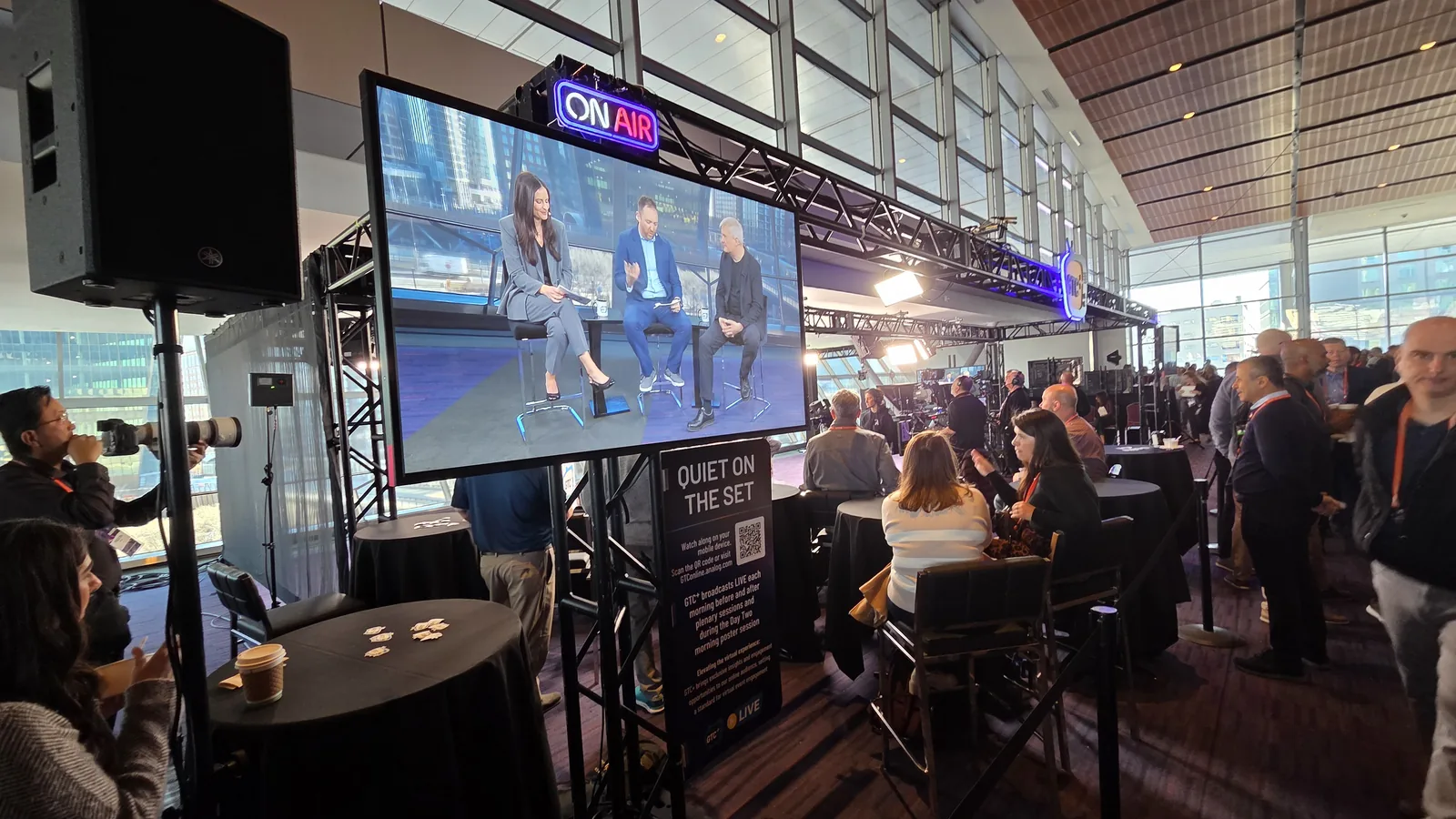
Dynamic signage can make a complicated conference easier to navigate. Smaller conversation areas can break up a large convention environment. Live illustration can turn a session into visual content attendees continue discussing throughout the day. A compact recording studio can capture customer stories, executive interviews, or attendee reactions while everyone is already onsite.
Some attendees also need spaces where very little happens. A quiet room with seating, power, and reliable Wi-Fi may not generate a dramatic photograph for social media, but it can dramatically improve the experience for someone attending a three-day conference. Not every part of an event needs to compete for attention.
A well-designed environment often works because it makes the day easier.
3. The traditional hour-long session deserves more scrutiny
Conference schedules have been organized around 45 and 60-minute blocks for so long that the format can feel inevitable.
While some subjects need the full hour, others may not, and planning intentionally around the content is the better option for both presenters and attendees.
A focused 20-minute keynote may have more impact than an hour-long presentation that stretches one idea across too much time. A customer interview may be more engaging than a formal panel. A short presentation followed by a facilitated discussion allows attendees to process what they just heard instead of immediately moving into another presentation.
The format of the day creates rhythm. A strong corporate conference might move from a large general session to a smaller peer discussion, then into networking, then back to a presentation or workshop.
Listening gives way to participation. Large groups become small groups. High-energy moments are balanced with quieter ones.
That variety helps maintain attention over a long day without resorting to constant spectacle. It also asks speakers to be more disciplined.
When someone has 20 minutes instead of an hour, the conversation changes. Speakers need to be more intentional with their time and identify what their audience really needs to hear, which examples are worth keeping, and what people should remember tomorrow.
That is usually a healthier way to build content.
4. First-time attendees and veterans are attending different versions of the same conference
Large events often treat the audience as one group.
Attendees can arrive with very different levels of familiarity and confidence. Someone attending for the first time may walk into a 1,000-person conference without knowing anyone. A longtime attendee may recognize people in every hallway. Those are very different experiences.
First-time attendees may benefit from a welcome gathering, a hosted table, an ambassador program, or a simple introduction to how the event works. A suggested networking group can give them a starting point before the opening reception.
Returning attendees may want something else. If they have already heard the introductory content for several years, an advanced peer discussion or smaller executive forum may provide more value. Experienced attendees can also become part of the experience themselves through mentoring or facilitated discussions.
Modern event platforms can help with this by recommending sessions or connections based on attendee profiles. That technology becomes much more useful when the agenda itself already contains meaningful choices.
5. Different people need different ways to connect
The same principle applies to networking styles.
Some attendees can walk into a reception with 700 people and leave two hours later with 25 new contacts. Others walk into the same room and spend the first 20 minutes wondering where to stand. If relationship-building is a genuine event objective, planners should provide more than one way to participate.
A six-person discussion can be more useful to one attendee than a large cocktail reception. A scheduled one-on-one meeting removes the awkwardness of the first introduction. A hosted dinner can create deeper conversation than an open expo floor.
Large social events still have value. They create energy and allow unexpected connections to happen. They just should not be the only option. Designing for different attendee types also makes the experience more inclusive without requiring every participant to announce how they prefer to interact.
People can choose the environment that works for them.
6. Production has more influence on engagement than it sometimes gets credit for
Agenda strategy and production planning are often treated as separate workstreams. They are closely connected.
A series of short sessions only works if transitions are tight. Interactive discussions require audio coverage that allows attendees to participate without waiting for a microphone. Roundtables need room layouts that support conversation. Breakout rotations depend on wayfinding and traffic flow.
Networking areas have their own production requirements. If the music is too loud, people cannot talk. If the lighting is too dark, the room becomes difficult to navigate. If the furniture is designed entirely around large standing groups, smaller conversations become awkward. Even the location of screens, food, bars, and registration can affect where people naturally gather.
That is why experienced production partners should be involved while the agenda and attendee journey are still being developed.
The technical plan can either support the behavior the planner wants or quietly make it harder.